
The Architecture You Touch
Why Millwork Matters
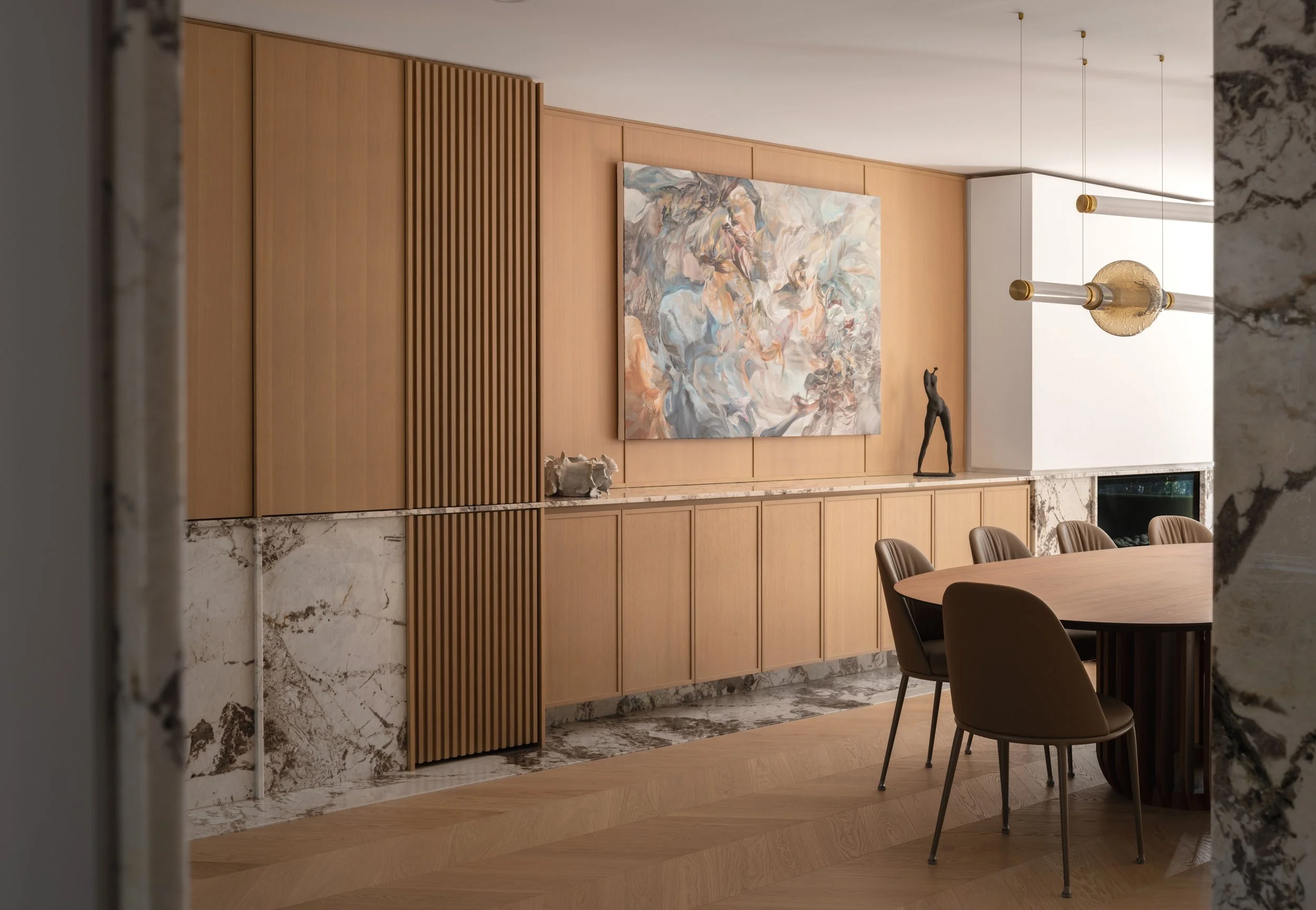
In residential architecture, it’s often the big moves that get the attention - form, massing, glazing, and the relationship to landscape. But often what can define how a house is lived in, understood, and remembered is something far more intimate: architectural millwork.
In projects like House in the Hill and House on a Ravine, (located in the Niagara Region and Toronto) custom millwork design is not an afterthought or a layer applied at the end. It is embedded in the architectural idea itself - shaping movement, defining space, and mediating between building and landscape.
Millwork as Spatial Organizer
In House in the Hill, the architecture is driven by a clear formal tension between a curvilinear public face and orthogonal volumes extending into the forest. Millwork becomes the tool that reconciles these geometries at a human scale.
An interior sculptural, curving wood wall found on the main floor does more than divide program - it becomes a spatial hinge between public and private zones. This is not cabinetry in the conventional sense; it is architecture rendered in wood. It guides circulation, frames views, and softens transitions between contrasting forms.
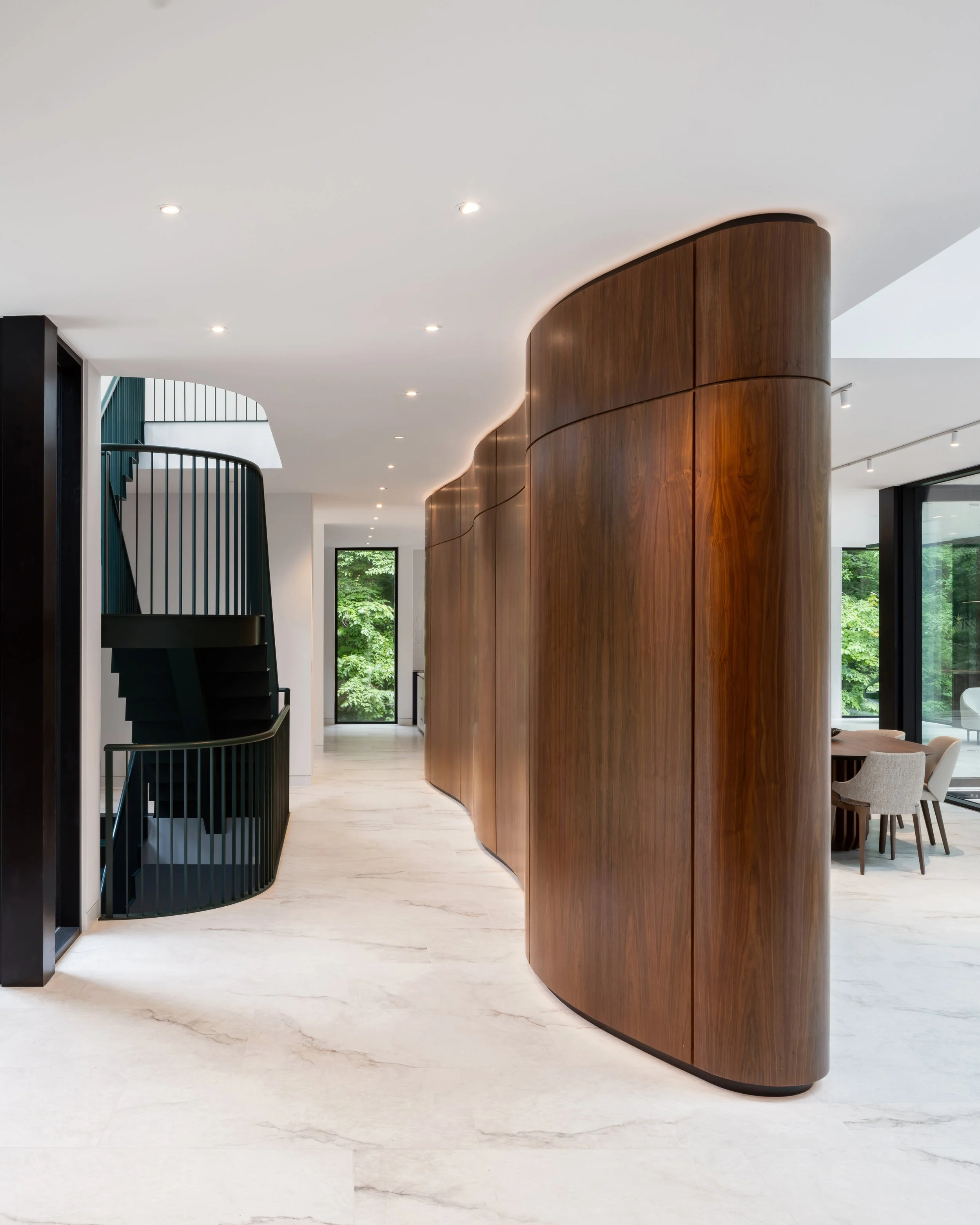
In House in the Hill, a sculptural, curving wood wall does more than divide program—it becomes a spatial hinge between public and private zones. All photography: Scott Norsworthy
Similarly, in House on a Ravine, the interior is organized around a central stair and expansive views to the landscape. Here, millwork works in tandem with these moves - integrating storage, thresholds, and moments of pause into a continuous spatial experience.
Continuity Between Architecture and Interior
One of the defining qualities of our work at These Architects, is an understanding of the seamless relationship between architecture and interiors. Millwork is one of the mediums through which this continuity is often achieved.
In House in the Hill, custom elements - library shelving, bespoke kitchen detailing, integrated fireplaces, and vanities - create a consistent material language that runs throughout the house. Rather than a collection of rooms, the house reads as a single, continuous environment.
This approach eliminates the typical hierarchy between “shell” and “fit-out.” The building is not simply clad and then furnished; it is crafted from the inside out.
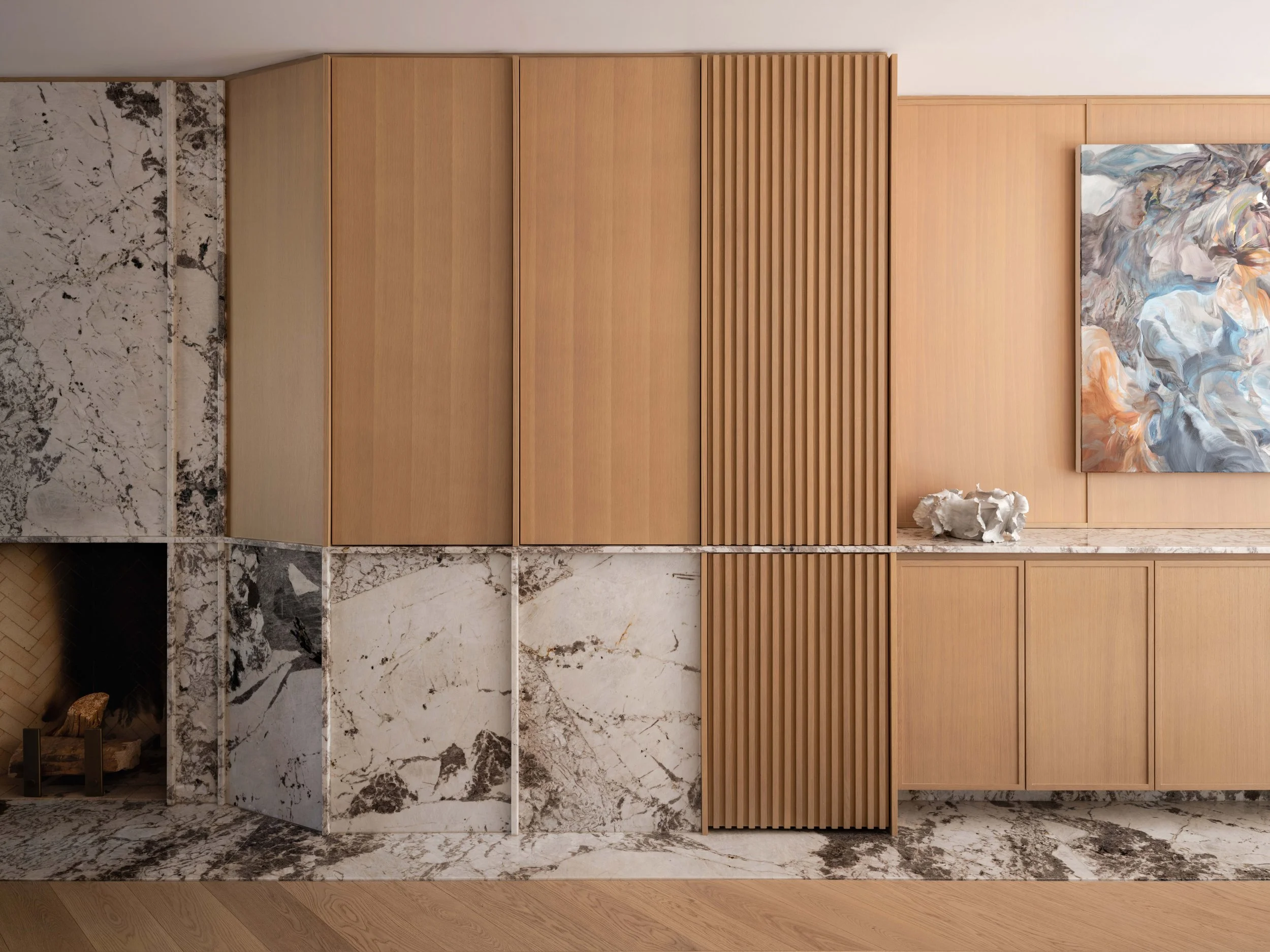
Intricate wood and marble detailing of the singular millwork wall that includes 2 fireplaces, dining room credenza and hidden storage compartments at the House on a Ravine
Framing Views and Anchoring Experience
Both projects are deeply tied to their landscapes - a wooded hilltop and a deep, lush ravine. Millwork plays a subtle but critical role in how those landscapes are experienced.
Large ravine facing window walls in House on a Ravine capture views while interior elements provide grounding. Built-ins, a kitchen bar counter, and integrated surfaces create moments where occupants can pause and engage with the ravine beyond.
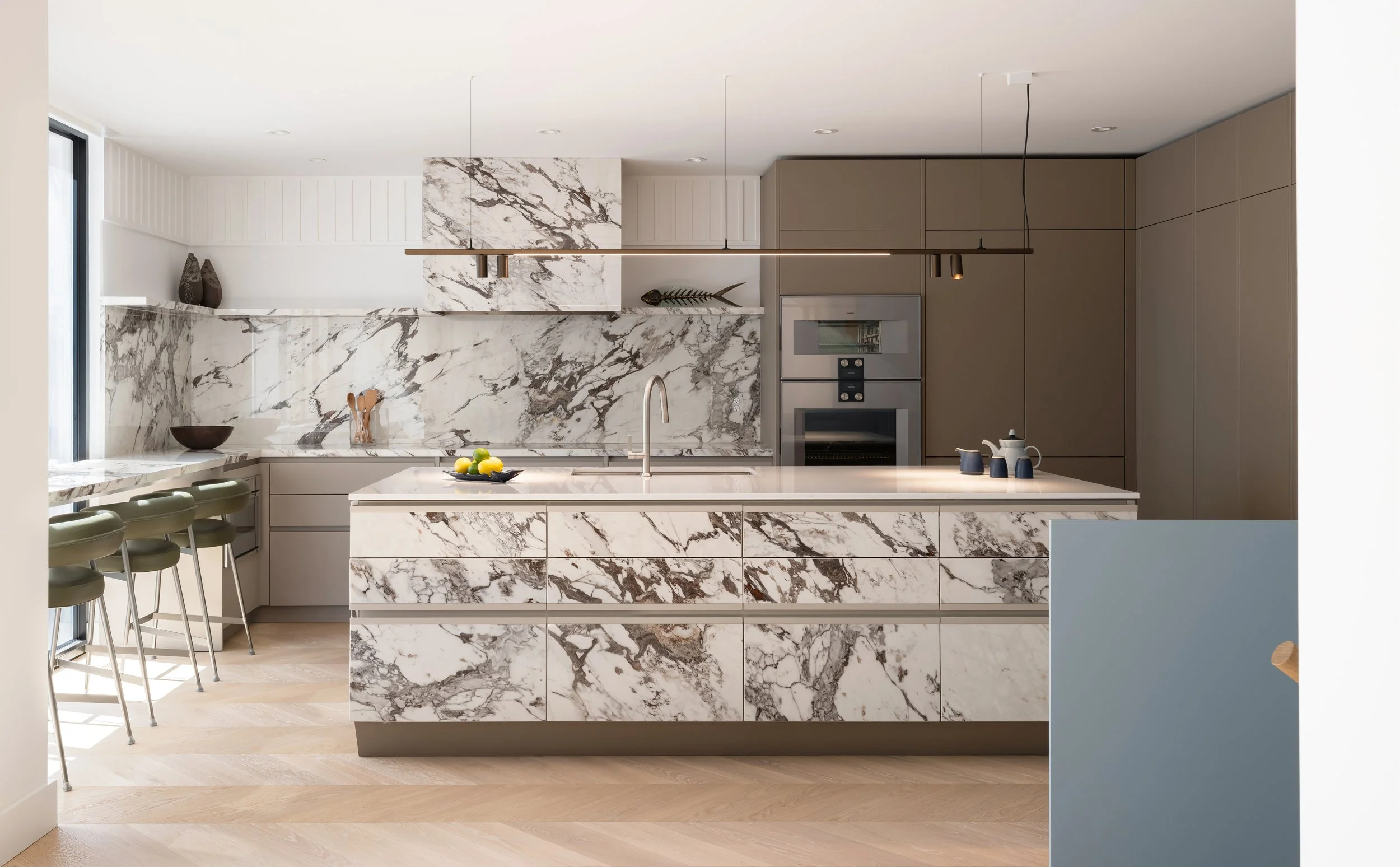
The custom designed kitchen at the House in a Ravine integrates a seamless countertop, allowing for an opportunity to engage with the ravine beyond.
In House in the Hill, millwork often aligns with sight lines - guiding the eye toward the forest beyond or framing interior vistas across double-height spaces. The result is a calibrated dialogue between inside and outside, where millwork acts as the mediator.

Walnut wall panels wrap and fold into a wooden staircase, providing a warm, intimate and highly tactile experience.
Craft, Precision, and Collaboration
Designing millwork at this level demands early and deep collaboration with fabricators. In both projects, specialist millworkers were integral to realizing the architectural vision.
This is where architecture shifts from concept to craft. Details such as seamless joints, integrated lighting, and material transitions require precision that can only be achieved through coordinated design and execution.
Millwork, in this sense, becomes a shared language between architect, builder, and artisan.
The Human Scale of Architecture
Ultimately, millwork is where architecture meets the body. It is the point of direct interaction - the surfaces we touch, the elements we open, and the details we engage with every day.
In bespoke homes like these, we believe the success of a project is measured not only by how it appears from a distance, but by how it feels to inhabit. The warmth of wood, the precise alignment of a shelf with a window, the thickness of a handrail - these subtle moments shape our daily experience. Over time, it is these carefully considered details that accumulate, transforming architecture from something simply seen into something deeply felt.
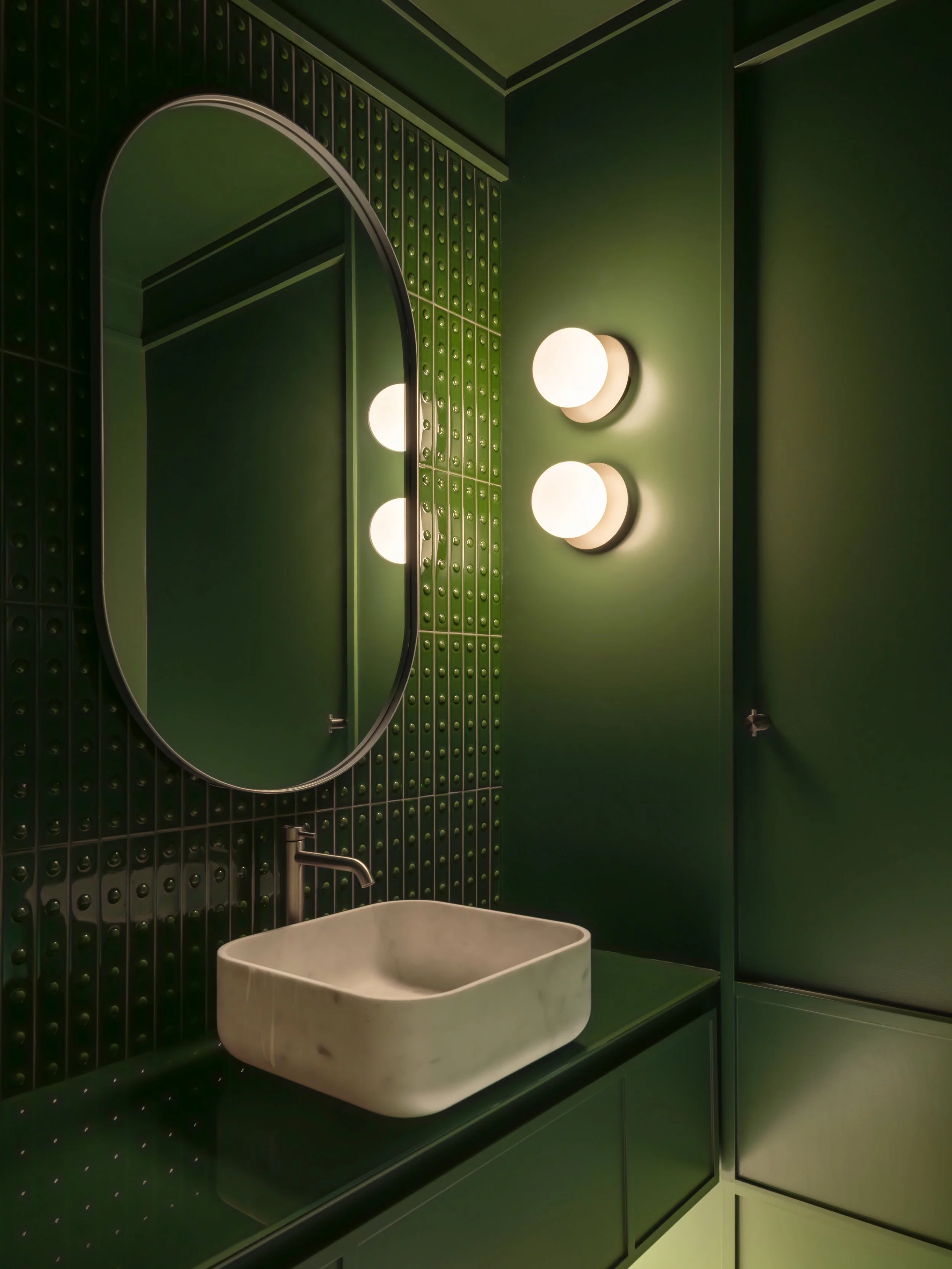
The integration of wall tiles, millwork panels, vanity and lighting help to define a cohesive experience of this powder room at the House on a Ravine.
House in the Hill and House on a Ravine remind us that some of architecture’s most meaningful ideas are expressed through its smallest details. Millwork is not furniture or decoration - it is architecture operating at the scale of the hand, the eye, and everyday life.
When designed with intention, millwork does more than fill space - it helps defines it and influences how architecture is experienced on a deeply human level. The most meaningful architecture is often found not only in grand gestures, but in the details we touch every day.

Ultimately, millwork is where architecture meets the body. It is what you lean against, open, touch, and live with every day.
If you’re considering a new home, renovation, or transformation of an existing space, we’d love to help you create something deeply personal and enduring. Let’s start the conversation!
