
Vertical Journeys: The Stair as Space, Sculpture and Experience
Custom Stair Design in the work of These Architects
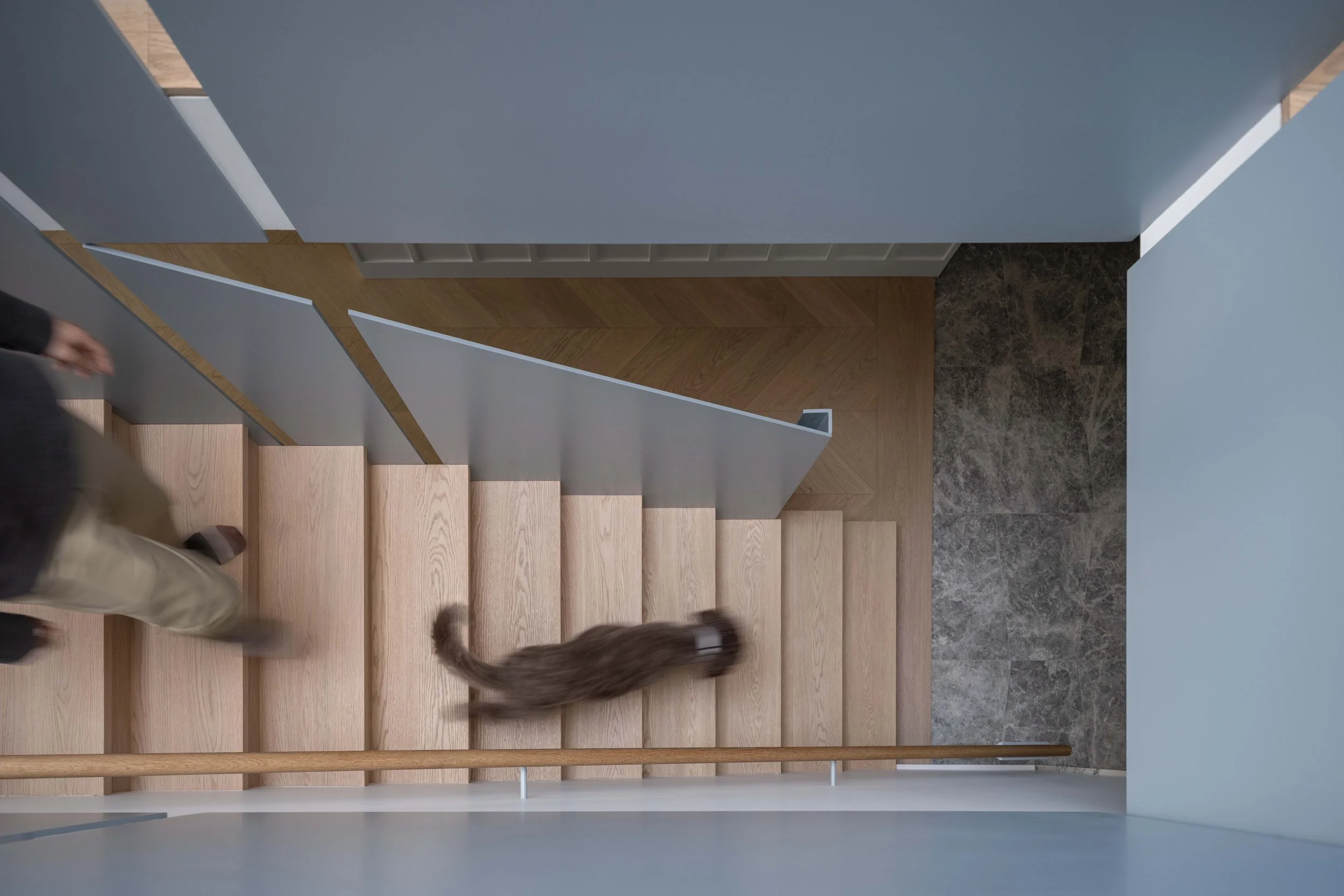
In many homes, a staircase is treated as a necessity - a means of moving from one floor to another. In the work of These Architects, however, stairs become something much more significant in contemporary residential architecture. They are architectural events, spatial organizers, sculptural objects, and moments of discovery that shape how a building is experienced.
We see stairs as an opportunity rather than an obligation. They are often among the most frequently used elements within a home, and yet they possess the unique ability to connect people not only vertically, but emotionally and visually to the spaces around them. A well-designed staircase can transform a daily routine into a memorable experience.
Organizing Space
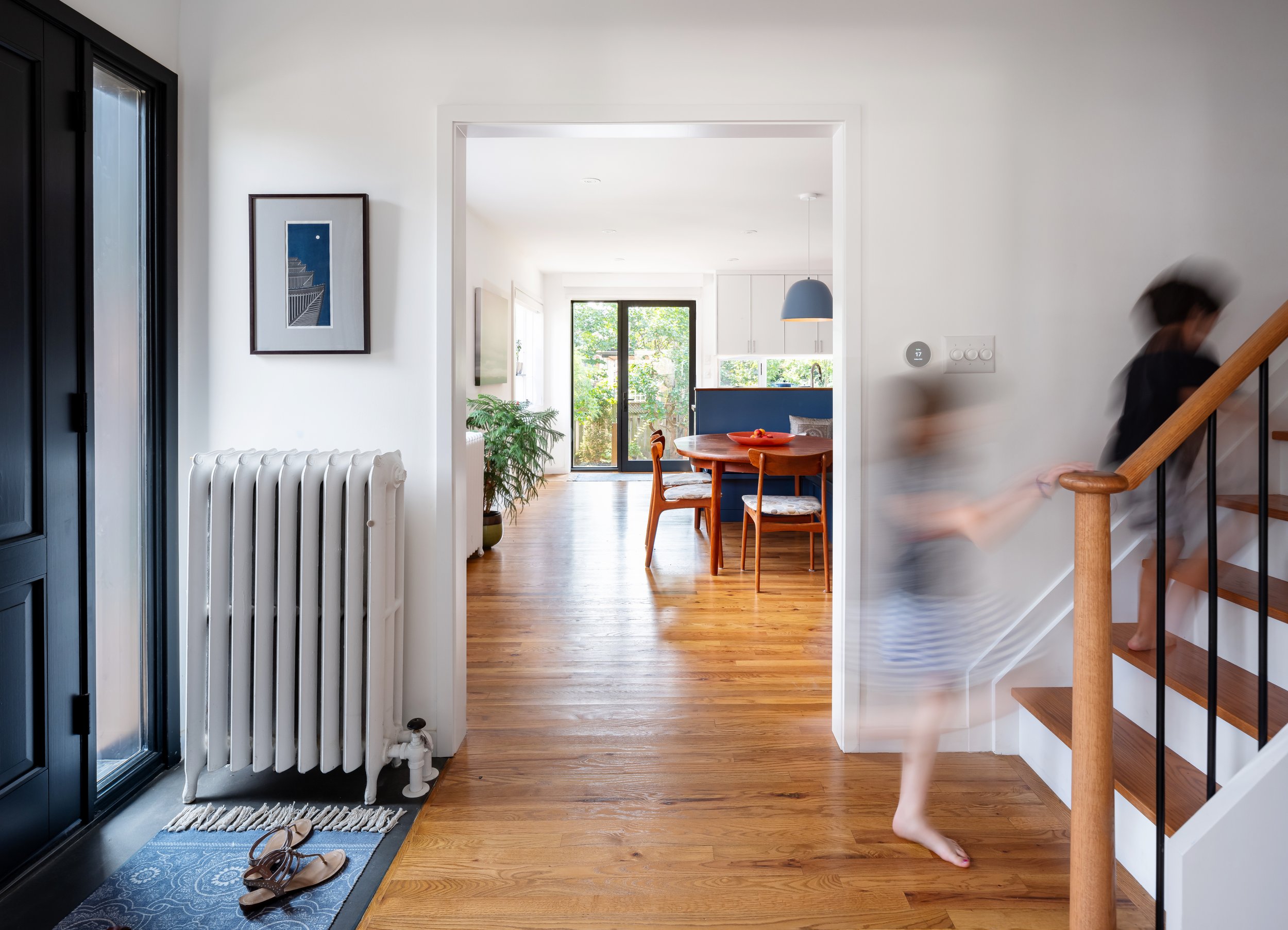
Stairs often serve as the spatial heart of our projects. Rather than being tucked away along the perimeter of a plan, they frequently become central organizing elements that establish relationships between rooms, levels, and views.
By carefully positioning a staircase, we can create moments of orientation and connection throughout a home. A stair can define circulation, separate public and private zones, frame important sightlines, and establish a clear hierarchy of spaces. It becomes a device through which the architecture reveals itself gradually, encouraging movement and exploration.
A Journey Rather Than a Route
We are interested in the experience of moving through architecture. A staircase offers one of the most powerful opportunities to choreograph that experience.
As one ascends or descends, perspectives shift, light changes, and new views emerge. The staircase becomes a sequence rather than a singular object. Openings, skylights, windows, and carefully framed views are often positioned to reveal themselves gradually, creating moments of anticipation and discovery.
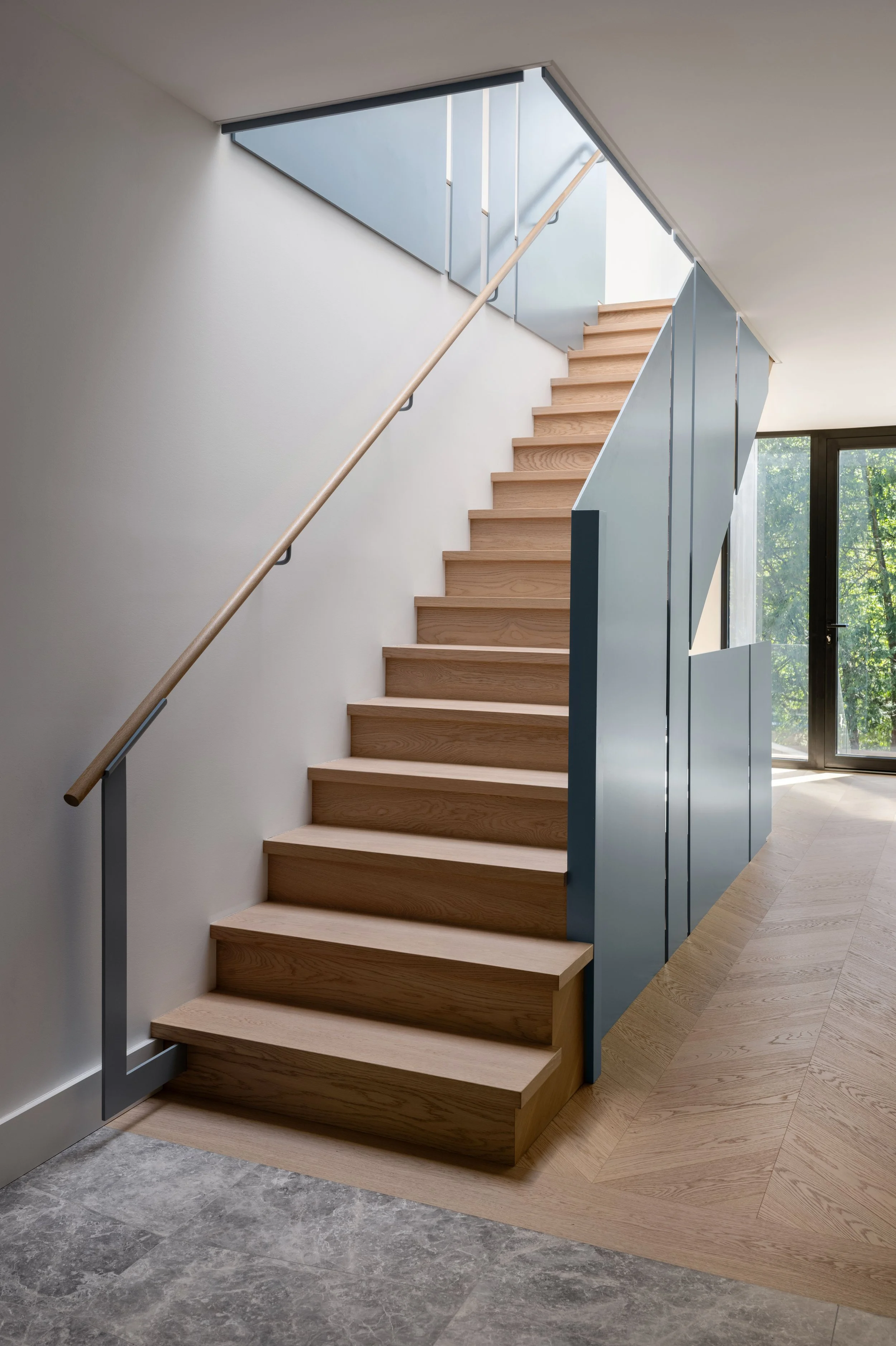
In projects such as House in the Hill in the Niagara Region and House on a Ravine in Toronto, the stair journey is carefully considered as a progression through light, material, and landscape. Views unfold incrementally, drawing occupants upward toward skylights or outward toward the surrounding natural environment.
Sculptural Presence
Beyond their functional role, our staircases are often designed as sculptural interventions within a space. Whether expressed through finely detailed metalwork, warm walnut cladding, or integrated millwork, they become defining architectural features that establish the character of a home.
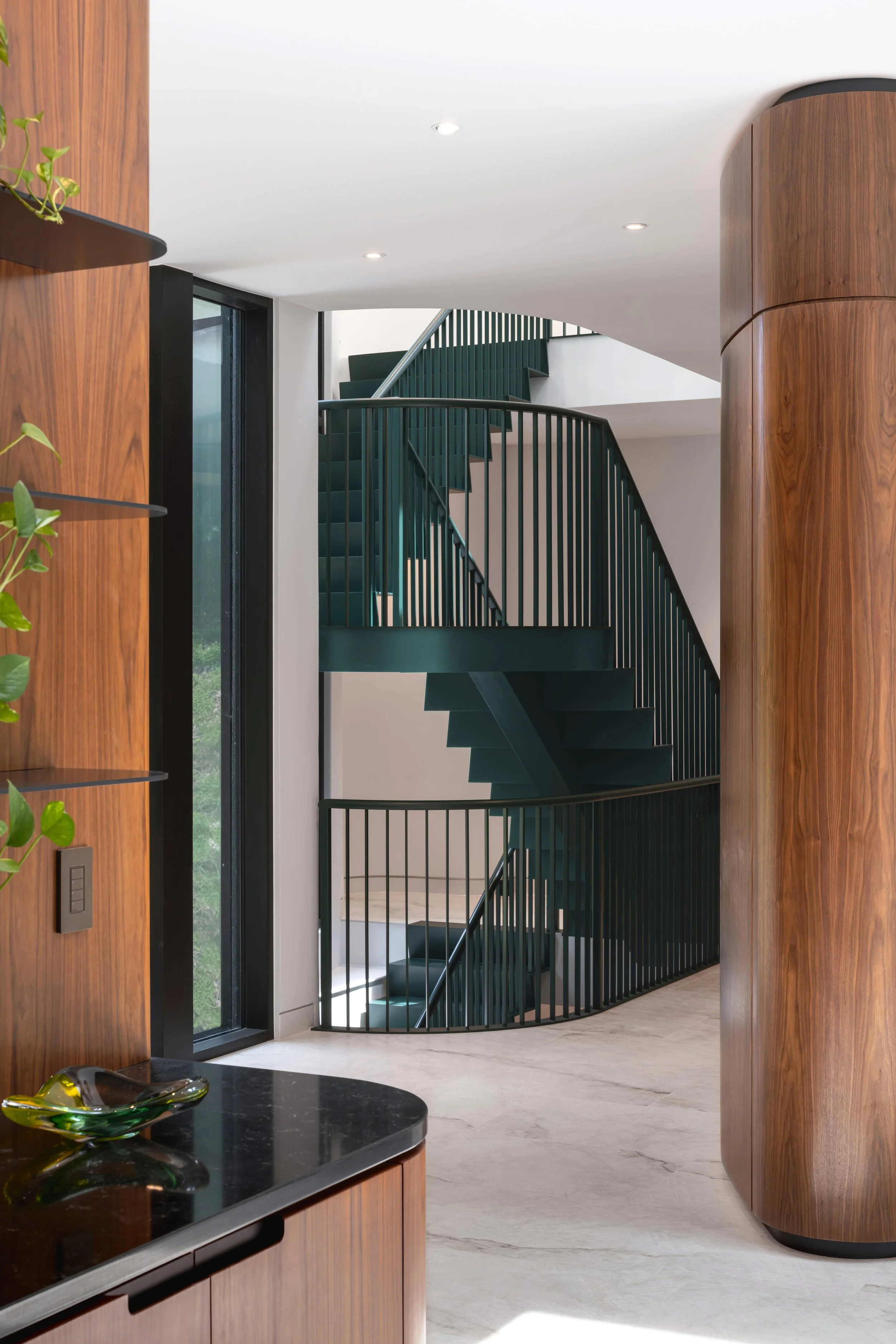
At House in the Hill, a dramatic green painted steel stair acts as a vertical connector while simultaneously functioning as a piece of inhabitable sculpture. Its finely articulated vertical detailing creates subtle movement as occupants pass through the space, filtering light and framing views through custom window openings inspired by stained glass compositions.
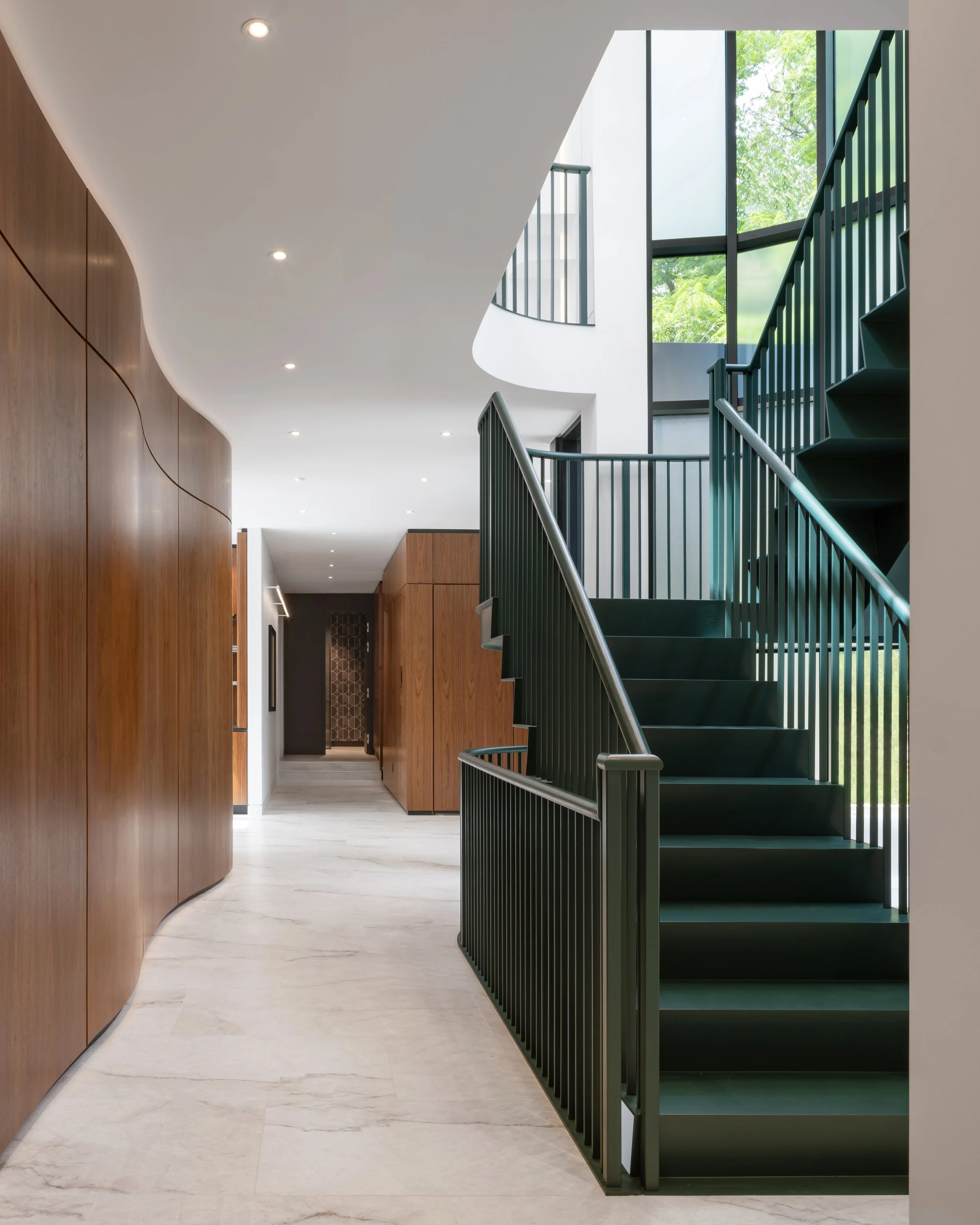

Elsewhere, more intimate stair experiences are created through material enclosure. Warm timber-lined stairways can provide a sense of privacy and calm, transforming the act of moving between floors into a quieter, more contemplative experience.
Light as a Building Material
Light plays a critical role in how our staircases are conceived. Rather than simply illuminating circulation spaces, natural light is used to animate movement and create atmosphere.
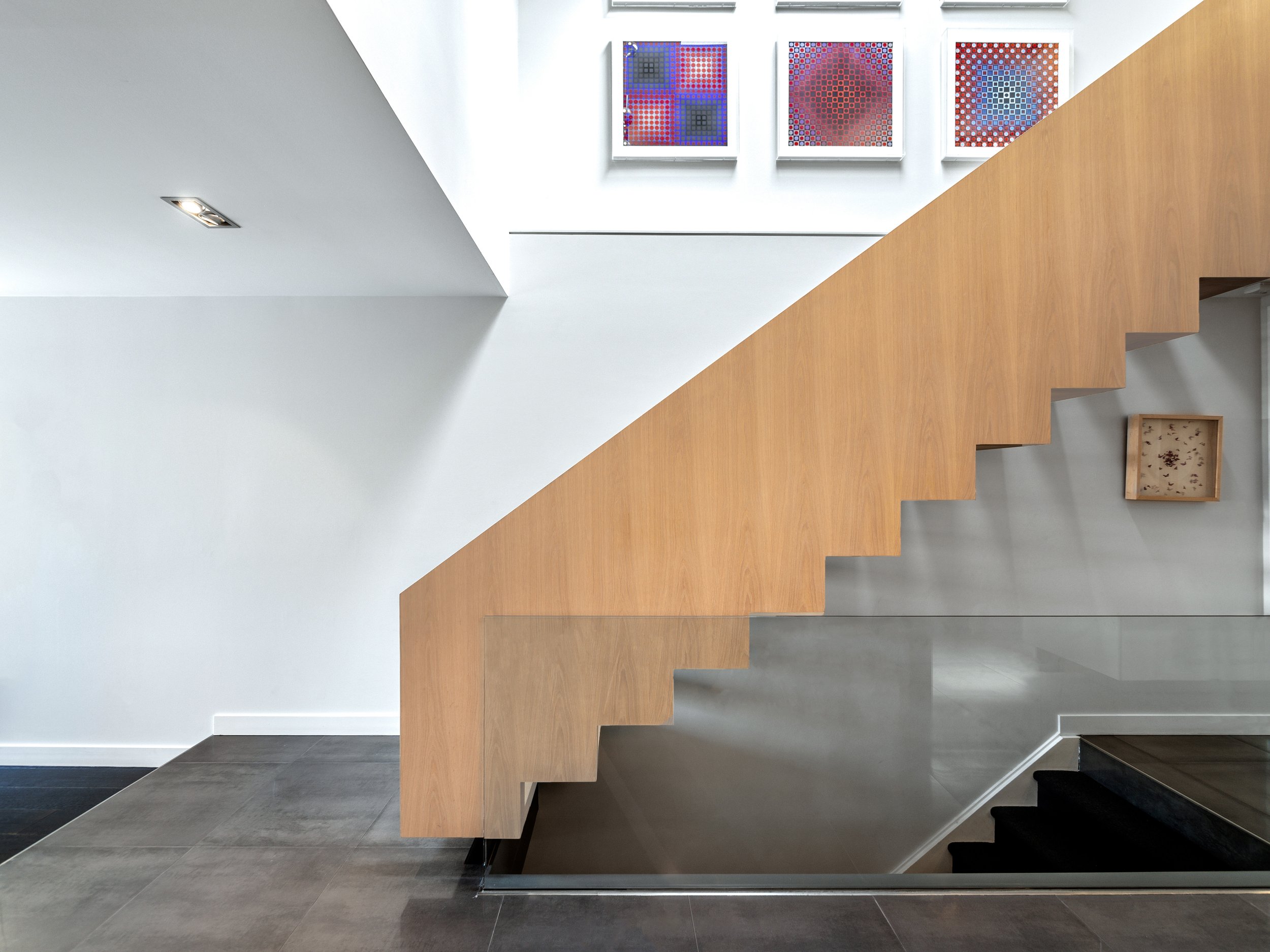
Skylights, clerestory windows, light wells, and carefully positioned openings bring changing patterns of daylight into the stair volume throughout the day. As occupants move through the home, the staircase becomes a place where light, shadow, and material interact.
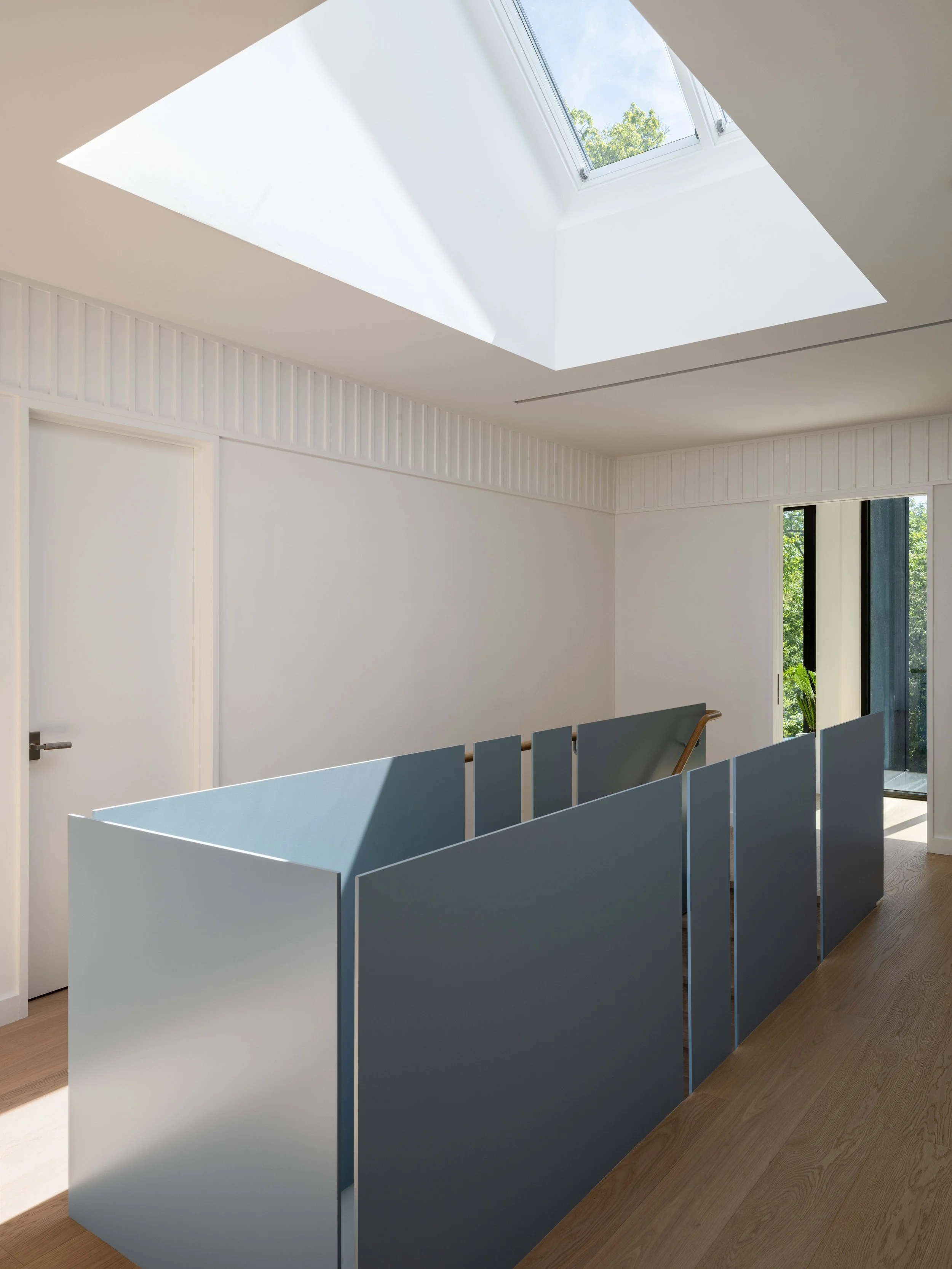
Often, these vertical spaces become some of the brightest and most uplifting areas within a project, drawing daylight deep into the heart of the building and connecting multiple levels through a shared experience of light.
Connecting Interior and Landscape
Like all aspects of our work, stair design is informed by our belief that architecture should foster a strong connection between interior spaces and the surrounding environment.
Stairs often become viewing devices that frame gardens, ravines, forests, courtyards, or distant landscapes. As occupants move vertically through a home, they encounter changing perspectives of the site, strengthening their awareness of place.

In this way, the stair becomes an instrument for engaging with the landscape. It encourages occupants to experience their surroundings from multiple vantage points and establishes a dynamic relationship between architecture and nature.
Craft and Detail
The success of a staircase lies in its details. Handrails, balustrades, connections, materials, and proportions all contribute to the overall experience.
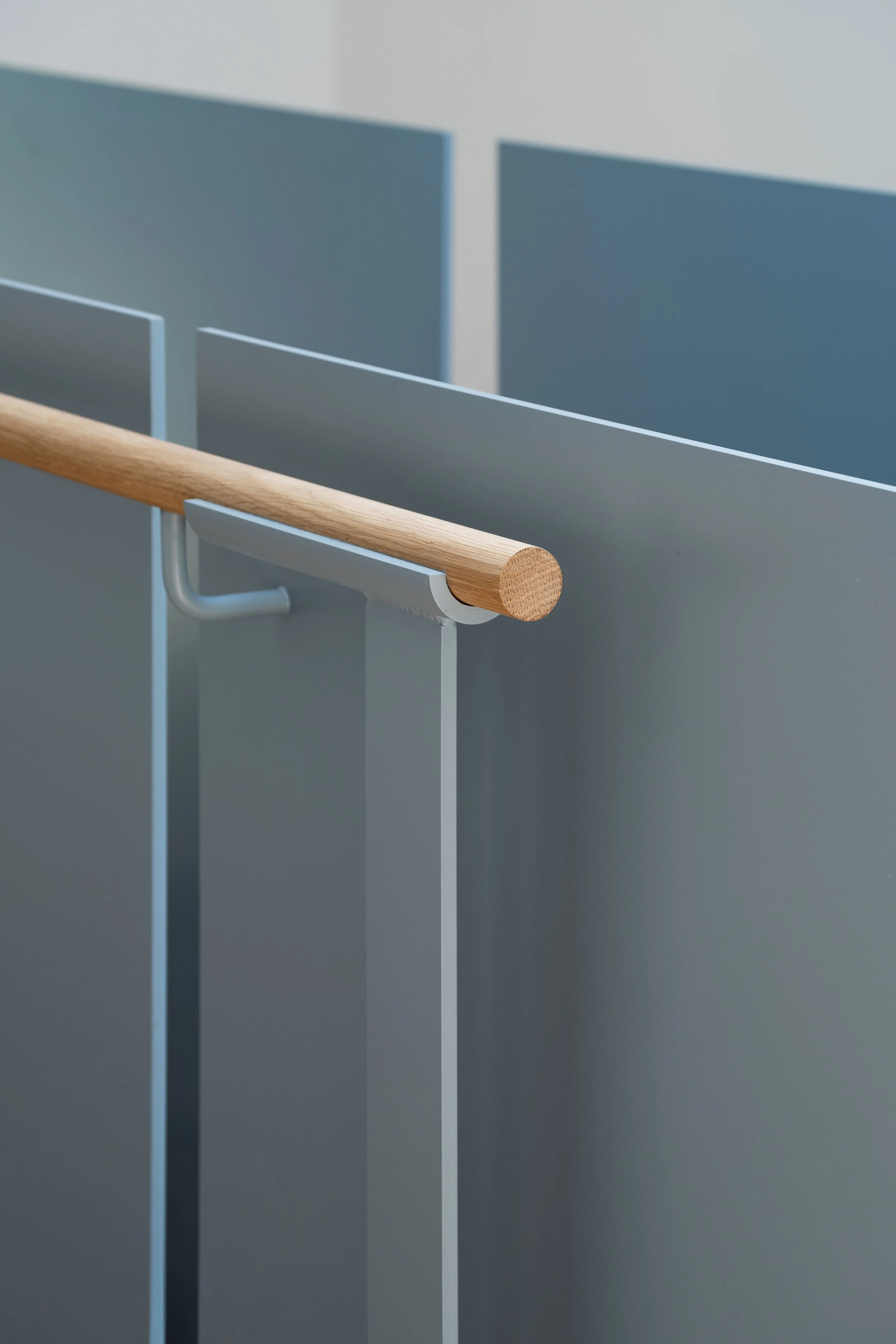

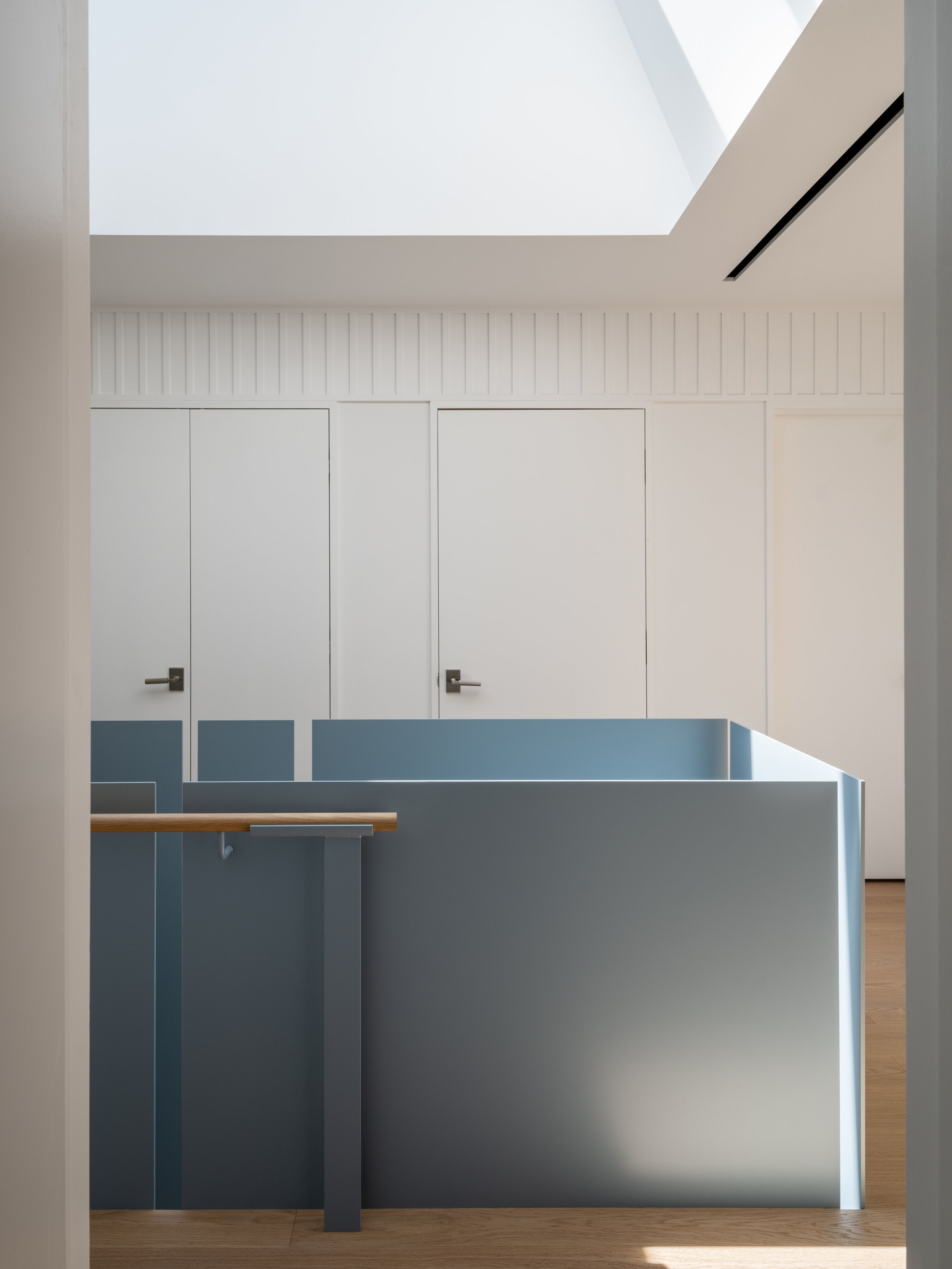
Our holistic approach extends from the architecture of the building to the smallest elements of construction. Staircases are often designed in conjunction with integrated millwork, wall panelling, flooring, and lighting to create seamless transitions between levels and spaces.
This attention to detail allows the stair to feel like a natural extension of the architecture rather than an isolated component.
More Than Circulation
Ultimately, we believe a staircase should do more than move people between floors. It should shape experience, create connections, bring light into a building, and enrich everyday life.
The stair is one of architecture's most powerful tools for creating movement, drama, and memory. When thoughtfully designed, it becomes a place of encounter, reflection, and discovery—a vertical journey that transforms how a space is understood and inhabited.
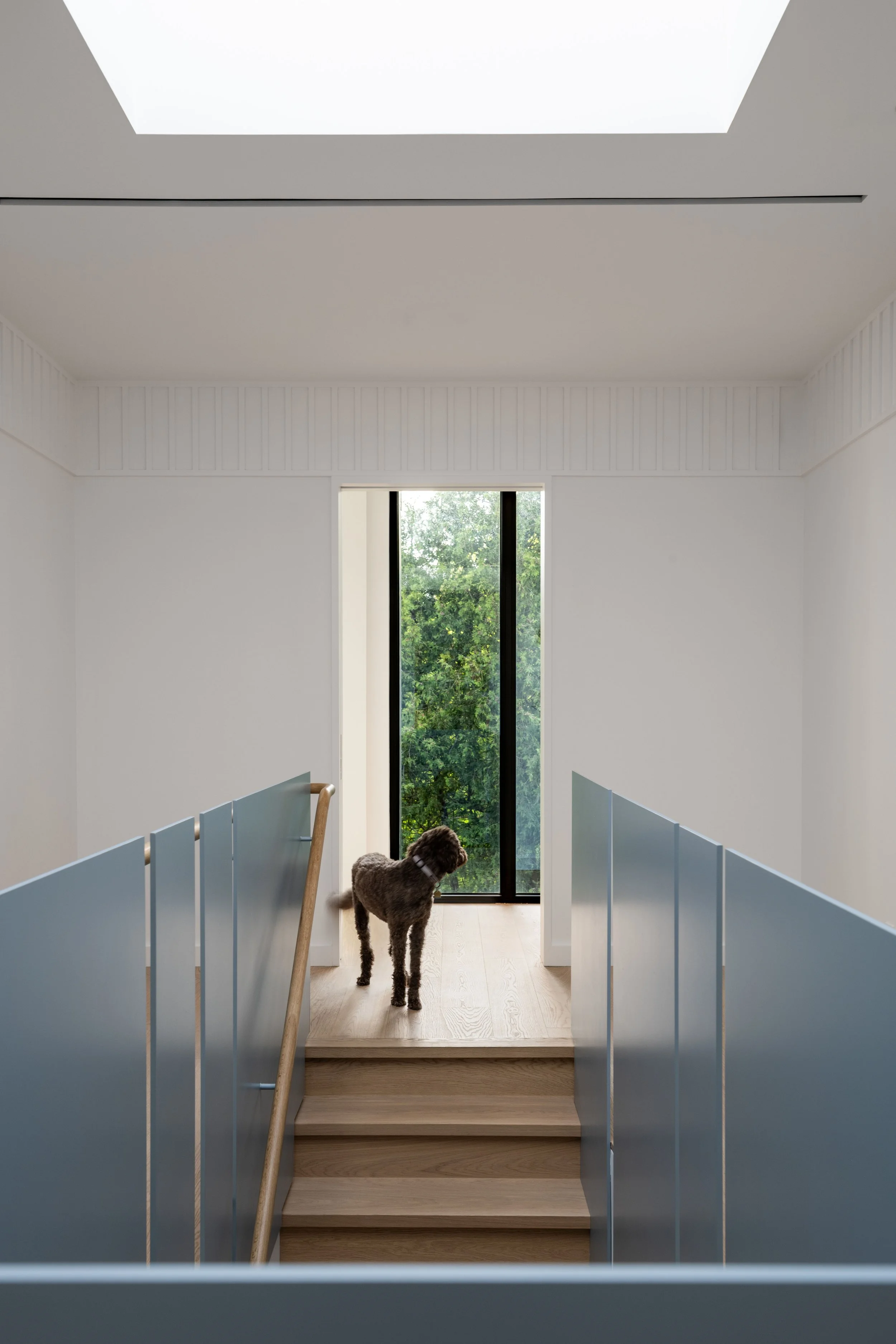
The stair is one of architecture's most powerful tools for creating movement, drama, and memory. Photography by Scott Norsworthy
Considering a home where space is thoughtfully designed? We’d love to start a conversation.
